

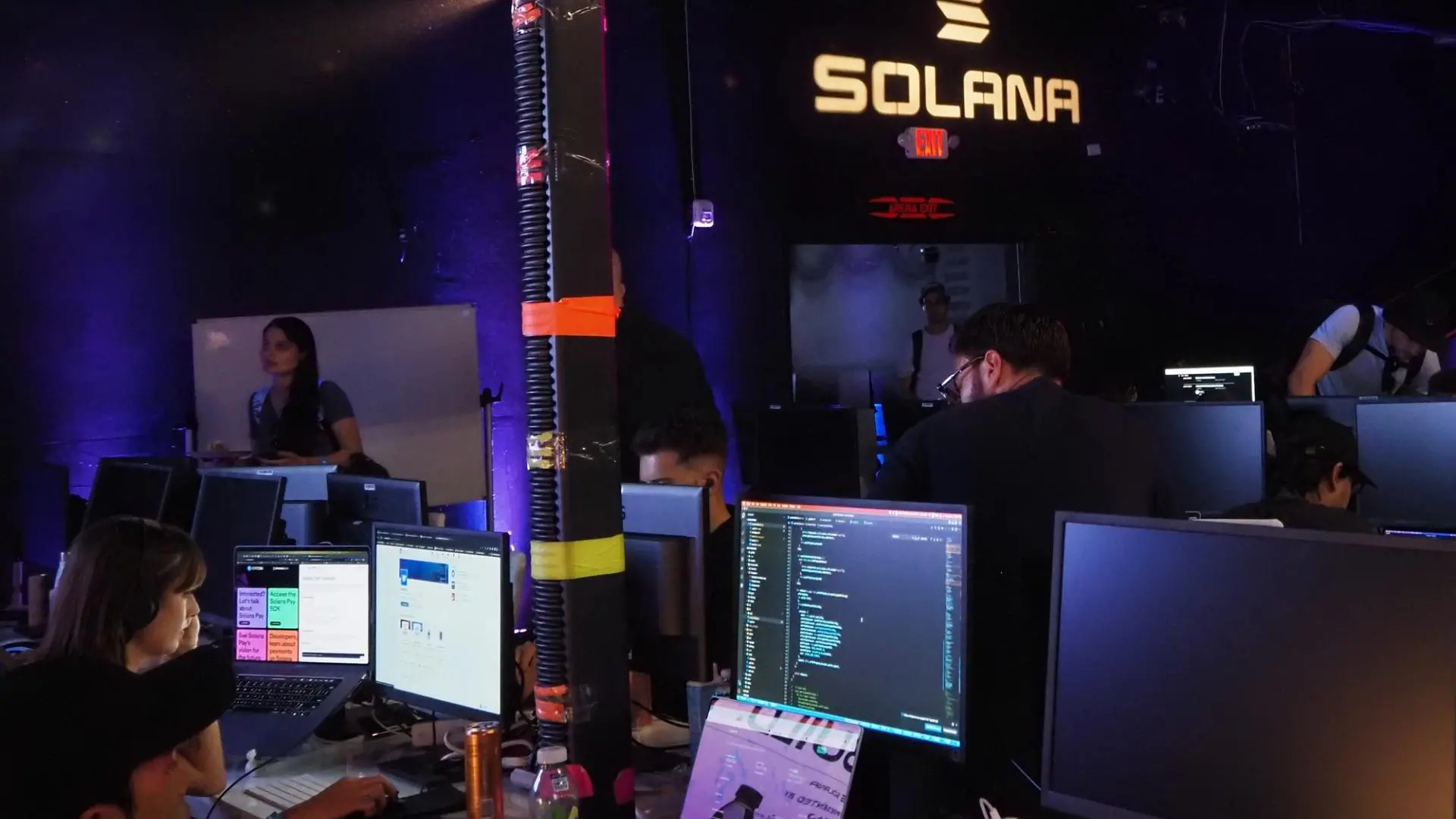
Solana's governance machinery is grinding through a pivotal week, with validators deciding on three proposals that could dramatically alter the network's supply dynamics. The most consequential measures are designed to reduce the growth of SOL's circulating supply—first by accelerating the network's disinflation schedule, and second by increasing the number of tokens burned in transaction fees from roughly 650 SOL per day to as much as 9,000 SOL. At current market prices, that upper bound translates to daily burns of approximately $800,000, a figure that would mark a significant escalation in the ecosystem's deflationary pressure.
The votes are being conducted on-chain, with each validator's influence weighted by the amount of SOL staked. This delegate-proof-of-stake mechanism is standard for Solana, but the outcome of this particular ballot could set a precedent for how the network handles monetary policy going forward. The voting window remains open through Thursday, and the results are far from certain, as staking whales and smaller validators alike weigh the trade-offs between reducing supply and preserving network security incentives.
The Two Supply-Reducing Proposals
The first proposal targets Solana's inflation curve. Solana launched with an inflationary schedule designed to start high and gradually decline toward a long-term fixed rate. The current schedule reduces inflation by a fixed percentage each epoch, but the new proposal would steepen that decline, pushing the network toward its eventual inflation target much sooner. Supporters argue that this responds to Solana's maturation as a network, where a lower issuance rate is appropriate given the growing share of fees being burned and the increased demand for block space.
Critics, however, warn that cutting inflation too quickly could weaken validator rewards, especially for smaller operators who rely on a steady stream of new SOL to cover infrastructure costs. As inflation declines, staking yields would fall, potentially prompting some holders to unstake. That could reduce the overall security budget of the network, as fewer staked tokens mean a lower cost to attempt a hostile takeover. Proponents counter that the rising value of fee burns and the network's active user base more than compensate for lower issuance, and that staking rewards remain attractive relative to other layer-1 blockchains.
The second proposal focuses on transaction fee burns. Currently, Solana burns a portion of the base fee and all of the priority fees, but the exact mechanisms are split between different fee components. The proposal under consideration would consolidate and expand the burn to include a much larger share of every transaction's fee, including both base fees and priority fees. Historically, Solana has burned about 50% of the base fee, with the remainder going to validators. The new framework would push that to a 100% burn of base fees in certain scenarios, while also capturing priority fees that currently flow to validators.
If passed, this change would not only raise the daily burn rate but also alter the incentive landscape for validators. Validators would earn less from transaction fees directly, but they could still benefit from increased SOL value over time due to reduced supply. The trade-off is a classic coordination problem: validators must collectively accept lower direct income for the long-term health of the ecosystem. The high level of institutional participation in Solana staking suggests that many large validators are thinking in these longer-term terms.
What $800,000 in Daily Burns Means
To put the potential burn rate in perspective, consider that Solana's daily transaction fee revenue has varied substantially over the past year, spiking during periods of peak activity—such as the meme coin frenzy of early 2024—and falling during quieter stretches. The current burn of roughly 650 SOL per day is already a meaningful counterweight to new issuance, which adds around 12,000 to 15,000 SOL daily under the existing inflation schedule. Even a burn of 9,000 SOL per day would not fully offset issuance, but it would slash the net supply growth rate by more than half.
Over a month, a sustained burn of 9,000 SOL per day would remove 270,000 SOL from circulation. At a price of $90 per SOL, that equates to roughly $24 million in monthly sell-side pressure removed. Such a reduction could tighten the market considerably, especially if demand for Solana's blockspace remains strong. The deflationary narrative could also attract new investors who view token burns as a proxy for fundamental value accrual, similar to how Ethereum's EIP-1559 burn mechanism has been marketed.
However, the actual burn rate depends on network activity. Triggering the full 9,000 SOL daily burn would require sustained high throughput and fee generation, which is not guaranteed. In practice, the burn floor would likely hover somewhere between the current 650 SOL and the proposed maximum, depending on demand for block space. The proposal's architects have argued that even a partial increase would be a net win for SOL holders, as any reduction in supply growth strengthens the asset's scarcity.
The Constitution Proposal
The third proposal is less about tokenomics and more about governance process. It seeks to ratify a formal Solana Constitution, codifying the rights and responsibilities of validators, token holders, and the broader community. The Constitution would also formalize the voting system currently used to decide these very proposals, a system that has operated on informal conventions rather than a founding document. This move aims to increase transparency and legitimacy, particularly as Solana faces growing regulatory scrutiny around the world.
The Constitution's adoption would not immediately change the voting mechanics, but it would create a clearer framework for future referendums. It could also pave the way for more sophisticated governance structures, such as delegated voting or quadratic voting, that are difficult to implement without a constitutional basis. Legal scholars have noted that a well-drafted blockchain constitution can help address jurisdictional ambiguities, especially when network participants span dozens of countries.
Some community members have raised concerns that the Constitution could be used to centralize power in the hands of top validators, who already hold significant sway due to the stake-weighted voting system. Others argue that formalizing governance is a necessary step for institutional adoption, as enterprises and funds require predictable rules before committing significant capital. The outcome of this vote will signal whether Solana is moving toward a more structured governance model or preferring to remain flexible and informal.
Background: Solana's Evolution from Inflation to Deflation
Solana's monetary policy has been a subject of debate since its mainnet launch in March 2020. The network began with an extremely high inflation rate of over 8%, designed to incentivize early validators and stakers while the ecosystem was still nascent. That rate was scheduled to decline by 15% each year until reaching a long-term fixed rate of 1.5%. This disinflation curve was intended to reward early adopters while eventually stabilizing the total supply.
In practice, Solana's inflation has already fallen to around 5% annually, but the new proposal would compress the timeline to reach the 1.5% floor much sooner. If adopted, the emission schedule could reach the 1.5% target well before the originally projected date, perhaps within the next few years. This shift would make Solana one of the lowest-issuance major blockchains, rivaling Ethereum's post-Merge issuance, which hovers around 0.5% to 1% depending on burn activity.
The fee burn mechanism has also undergone changes. Initially, Solana burned no transaction fees, with all fees going to validators. In late 2023, a governance vote introduced the 50% base fee burn, and priority fees were later folded into the burn. The current proposal represents the next logical step in this trajectory, pushing the burn rate to near-100% of all fee components. This mirrors a broader industry trend toward deflationary tokenomics, as networks recognize that fee burns can align user activity with token holder value.
Implications for Validators and Stakers
The combined effect of these proposals would be a substantial change in the income statement of a typical Solana validator. Today, validators earn revenue from two sources: new issuance and transaction fees. New issuance is the dominant source, accounting for roughly 80% of validator revenue in most periods. Fee revenue, including both base and priority fees, makes up the remainder. The new proposals would cut both streams: disinflation reduces the issuance component, and higher burns reduce the fee component.
To compensate, validators would have to rely on the potential appreciation of their SOL holdings and the SOL they receive as tips or off-chain payments. Some validators have already diversified into offering staking-as-a-service for institutional clients, which can generate fee income independent of the protocol. Others may consolidate, with smaller operations merging with larger ones to achieve economies of scale. This could reduce the number of active validators, potentially harming decentralization—a metric Solana has frequently touted.
Stakers who do not run validators themselves would also feel the impact. Staking yields are expected to drop from current levels of around 7% to perhaps 4% or 5% over the next couple of years, depending on how quickly the inflation curve declines. While this may cause some yield-seeking capital to leave Solana, long-term holders might view the trade-off as acceptable if the reduced supply leads to higher SOL prices. The net effect on staking participation will be a key metric to watch after the implementation.
Market Reactions and Broader Context
Early signals from the community suggest strong support for the fee burn increase, with several major validators publicly endorsing the measure. The disinflation proposal, however, has sparked more debate. Some stakeholders argue that cutting issuance too quickly could make Solana less competitive in attracting new validators, especially in emerging markets where electricity and hardware costs are significant. Others point to the growth of liquid staking platforms, which can pool smallholders and distribute rewards more efficiently, as a mitigating factor.
The proposal has also drawn attention from economists and crypto analysts studying the long-term sustainability of proof-of-stake networks. One line of reasoning holds that as a network matures, it should transition from being inflationary to disinflationary, and eventually to deflationary, as fees and burns take over as the primary economic levers. Ethereum is often cited as the leading example, having seen periods of net deflation since the Merge. Solana's move to accelerate its disinflation could position it on a similar path, albeit with a higher baseline issuance floor.
If the proposals pass, the effects will not be immediately visible. Governance changes take time to implement, with code upgrades requiring multiple epochs and network-wide coordination. The fee burn changes might require a hard fork, which would be the first major upgrade to Solana's protocol since its state-compression and token extensions initiatives. The Solana Foundation and core developers have already signaled their intention to implement the changes quickly, perhaps within a few months, assuming the votes carry.
The Vote and What Comes Next
All three votes are being conducted simultaneously, with the same deadline of Thursday. The outcome is determined by the total number of SOL staked in favor or against each proposal, not by the number of individual validator votes. This means that a small number of large validators—those with hundreds of thousands or even millions of staked SOL—could effectively decide the result. Voter participation is typically high for major proposals, but as of this writing, the partial results have not been made public.
The governance process itself is a test. Solana's community has often struggled with low engagement in governance, and the constitution proposal is partly an attempt to address this. By formalizing the voting system, the network hopes to attract more participation from token holders who currently stay on the sidelines. Some observers believe that the outcome of this vote will be watched closely by other blockchains, as they consider similar changes to their own monetary policies.
Beyond the immediate ballot, the implications stretch to the broader competitive landscape. If Solana succeeds in reducing supply growth while maintaining strong throughput, it could strengthen its case as a superior alternative to Ethereum, which faces ongoing debates about scalability and fee dynamics. Conversely, a failure to pass these proposals might be interpreted as a signal that Solana's governance is too fragmented to make tough decisions, a narrative that competitors could exploit.
In any case, the next few days will be formative for Solana's trajectory. The network has already proven its ability to handle high transaction volumes, and these tokenomics upgrades could cement its position as a leader in the layer-1 race. The decision now rests in the hands of the validators, who must balance their own financial interests against the long-term prosperity of the ecosystem they secure.
Source:Coindesk News