Jul 15, 2026Twila Rosenbaum Kalshi has developed a forward curve for GPU rental costs using prediction market contracts, extending up to a year. This move places it alongside CME Group and ICE in the race to standardize AI computing power as a tradable commodity. The tool aims to provide price transparency and hedging capabilities for the volatile GPU market, which is projected to reach trillions in spending over the next decade. View more
Jul 14, 2026Twila Rosenbaum The AI & Big Data Expo Europe 2026 is set to bring together industry leaders, technologists, and innovators. This article highlights the most anticipated sessions, groundbreaking technologies, and strategic insights that will shape the future of artificial intelligence and data analytics. View more
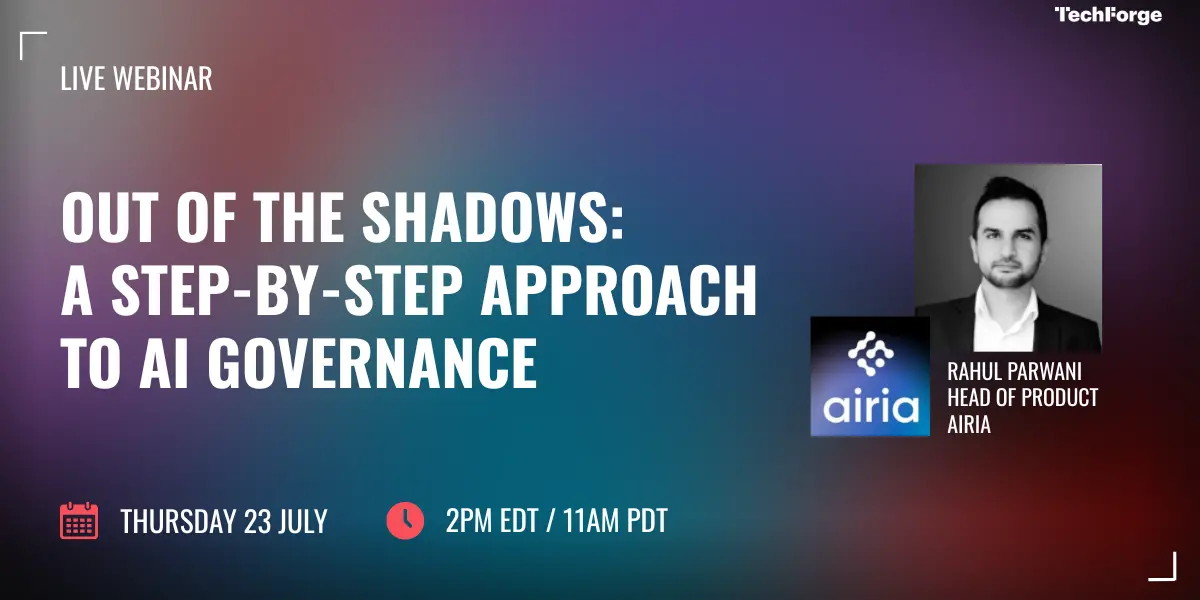
Jul 14, 2026Twila Rosenbaum This comprehensive guide outlines a practical step-by-step approach to AI governance, covering risk assessment, policy development, transparency, and accountability. It helps organizations navigate the complex landscape of AI regulation and ethical considerations. View more
Jul 14, 2026Twila Rosenbaum AI agent crawlers, like those from OpenAI and Google, increasingly require permission before scraping website content. This article explains the reasons behind the shift—privacy concerns, copyright issues, and server load—and provides actionable steps for site owners to manage access. Also covered are best practices for both crawler operators and publishers to navigate this new landscape. View more
Jul 13, 2026Twila Rosenbaum Malware analysts often grapple with noisy sandbox data. A new study demonstrates how to isolate the most discriminative behavioral signals for Trojan detection. By reducing 146 features to 33, the researchers built a lightweight neural network that runs on standard Windows hardware. The feature set maps directly to Trojan tradecraft, offering a practical checklist for threat hunting and detection rule tuning. View more
Jul 13, 2026Twila Rosenbaum A newly documented phishing campaign is targeting professionals with fake LinkedIn business emails, abusing Adobe’s trusted A/B testing platform to evade detection. The attack uses double extensions and obfuscated HTML files to trick victims into entering their LinkedIn credentials. Multi-factor authentication and careful inspection of links can help prevent compromise. View more
Jul 13, 2026Twila Rosenbaum Center for Internet Security offers pre-hardened OS images optimized for AI workloads on AWS. These images reduce misconfiguration risk, support compliance frameworks such as PCI DSS, SOC 2, and HIPAA, and accelerate deployment for model training, inference, and HPC. Available in two variants—one for AI workloads and one for supercomputing—they provide a consistent, secure baseline that helps teams move faster. View more
Jul 13, 2026Twila Rosenbaum At the Span Cyber Security Arena conference, Hrvoje Englman addressed how AI coding assistants are reshaping enterprise security. He emphasized enabling secure AI use rather than blocking it, and warned about the 'bus-factor problem' with undocumented agentic systems. Englman also pushed back on autonomous SOC hype and reframed the cybersecurity talent gap. View more
Jul 13, 2026Twila Rosenbaum Cisco's AI threat intelligence team tested 15 frontier models from OpenAI, Anthropic, Google, Amazon, and xAI. Multi-turn attack success rates reached as high as 88%, revealing that single-turn benchmarks drastically underestimate real vulnerabilities. Configurations like reasoning mode can cut failure rates in half, but gaps remain. The study calls for industry-wide adoption of multi-turn safety testing. View more
Your experience on this site will be improved by allowing cookies Cookie Policy
These cookies are essential for the website to function properly.
These cookies help us understand how visitors interact with the website.
These cookies are used to deliver personalized advertisements.