

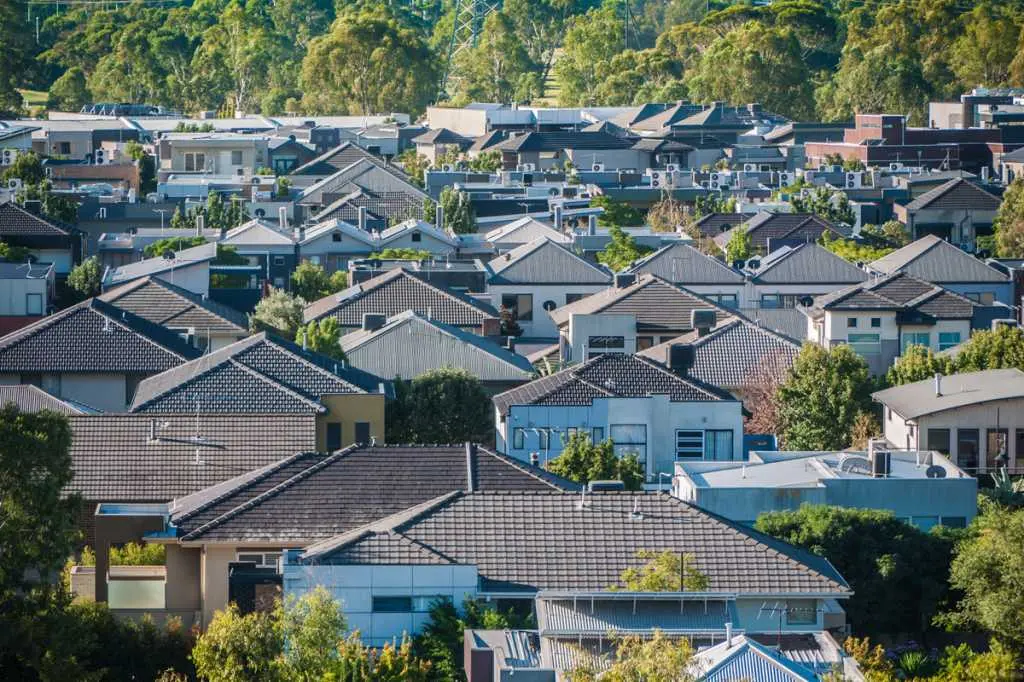
Headline: An AI Data Center in Your Home?
Key Facts
- Growing resistance to large AI data center construction is pushing some companies to explore distributed models, including small compute systems for residential settings.
- Pilot-stage discussions involve homebuilders, chip designers, and energy management firms, suggesting the idea has moved beyond hobbyist home labs.
- Housing affordability pressures are making homeowners more interested in monetizing underused spaces, from basements and utility rooms to detached structures.
- Several adjacent business models exist: controlled edge-host programs, decentralized compute marketplaces, and traditional infrastructure brokers.
- The main obstacles are residential power limits, inadequate broadband, heat, noise, security, insurance, zoning, liability, and customer trust.
- The realistic future is not mass residential data centers but selective, tightly managed micro-hosting in favorable locations.
As artificial intelligence accelerates demand for processing capacity, the data center industry faces a dual challenge: build enormous facilities fast enough to meet demand, or distribute compute closer to where it is needed. Large-scale data center projects have encountered local opposition over land use, energy consumption, water usage, and noise. That resistance is encouraging some companies to consider a more distributed model. The idea is no longer confined to hobbyist home labs or fringe edge-computing experiments. It is now credible enough to be discussed by experts in housing, energy management, and economic infrastructure. It is not mainstream, but it deserves serious examination.
Economic Forces at Work
The timing is not accidental. Homes are expensive, especially for buyers who purchased at elevated prices and interest rates. Mortgage payments weigh heavily on household budgets, while insurance and property taxes continue to climb. In this environment, homeowners are increasingly interested in turning underutilized parts of their properties into sources of recurring income. Spare rooms have become short-term rentals. Garages have become workshops or accessory dwelling units. Rooftops have become solar assets. Now, major players in housing and technology are considering basements, utility rooms, and detached structures as potential spaces for small-scale server infrastructure.
At the same time, businesses are under pressure to rethink where compute lives. AI is increasing demand for processing capacity. Edge workloads continue to grow. Not every application needs to run in a hyperscale facility, and not every business wants to pay hyperscale economics. There is strategic appeal in pushing workloads closer to users or into lower-cost, more widely distributed locations. Residential hosting becomes one possible answer to a question the industry is already asking: How much infrastructure can be decentralized without losing economic and operational control?
There is also a cultural shift. More technically capable homeowners now understand racks, uninterruptible power supply systems, network monitoring, remote access, and even local power upgrades. The old gap between enterprise infrastructure knowledge and prosumer infrastructure knowledge has narrowed. That makes the idea feel more achievable, even if the barriers to doing it commercially remain substantial.
Business Models Taking Shape
The most important point to understand is that there is not yet a large, polished market in which random homeowners openly host random third-party servers the way people list rooms on short-term rental platforms. What exists are several adjacent business models that point in that direction without fully embracing residential colocation.
One model is the controlled edge-host program. In this arrangement, a company places or manages compute equipment in selected distributed locations, often with strict standards for connectivity, power, and maintenance. The homeowner or site operator is not acting as an open colocation provider. Instead, they participate in a curated hosting network where the provider controls the service architecture.
Another model is the decentralized compute marketplace. These platforms allow individuals or smaller operators to sell spare compute capacity from their own hardware. This is closer to the economics of monetizing residential infrastructure. Still, it is not the same as taking custody of someone else’s physical server and being responsible for the environment in which it runs. Selling compute cycles is one thing. Housing enterprise hardware is another.
A third model is the traditional infrastructure broker or marketplace. These companies already match buyers and sellers for colocation, bare-metal, and related services. They are proof that brokering infrastructure relationships is a viable business. But those relationships generally connect enterprises to professional facilities, not to homeowners willing to make room for a small server farm next to a furnace or water heater.
In other words, the components of a market are visible. Distributed demand exists. Brokering exists. Willing hosts likely exist. But the residential version remains incomplete because the trust, standardization, and liability models are still underdeveloped.
The Upside Is Obvious
The strongest positive component of this potential market is its financial aspect. If a homeowner can generate enough monthly income to offset part of a mortgage payment, the idea will always attract attention, especially in newer housing markets where monthly carrying costs are high and people are seeking durable sources of supplemental income. Hosting infrastructure sounds like, at least in theory, a more stable and less socially intrusive way to monetize a property than opening a home to a constant stream of short-term tenants.
There is also an argument for asset utilization. Many homes contain underused spaces that could produce some economic return. A basement corner, a detached workshop, or a dedicated utility room may be worthless from a revenue perspective until someone turns it into something productive. If infrastructure providers are willing to pay for access to space, power, and connectivity, the home begins to function as part of the digital economy rather than simply as shelter.
For businesses, the appeal is equally straightforward. Residential locations may offer lower real estate costs, faster deployment, and better geographic distribution for select workloads. In regions with relatively inexpensive electricity and strong connectivity, a modest amount of residential hosting could fill gaps that do not warrant full commercial data center expansion. Homes will not replace data centers; rather, they might, in a very narrow set of circumstances, complement them.
The Downsides Are Everything Else
The problem with the whole idea is that the negatives are significant. Residential power is not data center power. Residential broadband is not enterprise-grade networking. A private home is not a secure, redundant, environmentally controlled facility, no matter how carefully a rack is installed.
Power is the first issue. Most homes are not designed to handle sustained commercial server loads without electrical upgrades. These upgrades can be expensive, heavily regulated, and dependent on local utility cooperation. Once backup batteries, uninterruptible power supply systems, cooling equipment, and dedicated circuits are added, the project starts to look less like a side hustle and more like a facilities operation.
Heat and noise follow quickly. Commercial hardware generates both continuously, which affects the comfort of the house, the cost of climate control, and the long-term reliability of the equipment. It also transforms residential life. Maintenance becomes routine. Monitoring becomes constant. The house begins to absorb the rhythm of an always-on machine room.
Then come the risks that stall many otherwise creative ideas. Fire hazards. Water damage. Physical theft. Tampering. Insurance complications. Zoning restrictions. Homeowner association objections. Lease restrictions for tenants. Questions about who can access the equipment and when. Liability if a customer’s hardware is damaged. Compliance concerns if sensitive data or regulated workloads are involved. All of these factors are manageable in theory, but they are precisely why professional facilities exist.
Customer trust may be the biggest obstacle of all. Most businesses are comfortable buying compute from a recognized provider because they assume a predictable operating environment. That assumption weakens significantly when the infrastructure sits in a private residence. Who is responsible during an outage? What happens if there is a storm, a flood, or a neighborhood power event? How is physical access controlled? How are incidents documented? Those questions are not edge cases. They determine the model’s viability.
Where Residential Hosting Could Work
Residential data hosting is unlikely to become the next mainstream large-scale hosting model. The economics of professional data centers still win in most situations because those facilities were built to solve exactly the problems that home models will struggle to address. Reliability, security, redundancy, and customer assurance are difficult and expensive to achieve. Purpose-built environments handle them better.
Still, the concept should not be dismissed outright. In some parts of the country, there may be a path forward. Cheap power. Upgradeable electrical service. Strong broadband. Detached or isolated space. Favorable local rules. Workloads that benefit from geographic distribution and do not require pristine enterprise conditions. In those scenarios, carefully managed micro-hosting could make sense.
That is probably the realistic future. Not a short-term rental marketplace for random servers. Not whole neighborhoods converted into basement data centers. Instead, a selective market where curated providers match specific homeowners or small properties with specific infrastructure needs under tightly controlled terms. What will start as a niche could still be enough to matter.
Source:InfoWorld News