

Key facts
- SAP has committed more than €1bn over four years to Prior Labs, a German startup that builds tabular foundation models.
- Sean Kask, SAP’s chief AI strategy officer, says established software companies must rebuild their products around AI rather than add AI as a feature.
- Tabular models handle rows, columns, and spreadsheets that large language models cannot mathematically process.
- Prior Labs leads the TabArena benchmark and has applied its models to cancer diagnosis and bank transactions.
- SAP keeps Prior Labs as a separate lab with open-weight models, while using more than 100 models from other providers internally.
- SAP argues Europe should not compete directly on large language models but should build the data assets that make AI useful.
Why SAP made a €1bn bet on tabular AI
SAP’s decision to commit more than €1bn over four years to Prior Labs is not a bet on another large language model. It is a bet on the data layer that most AI companies have overlooked. Prior Labs, a German startup, builds tabular foundation models: AI systems designed for data held in tables, the rows and columns that underpin spreadsheets, ERP systems, financial ledgers, and operational databases. SAP completed the acquisition in July and has promised to grow Prior Labs into a frontier AI lab.
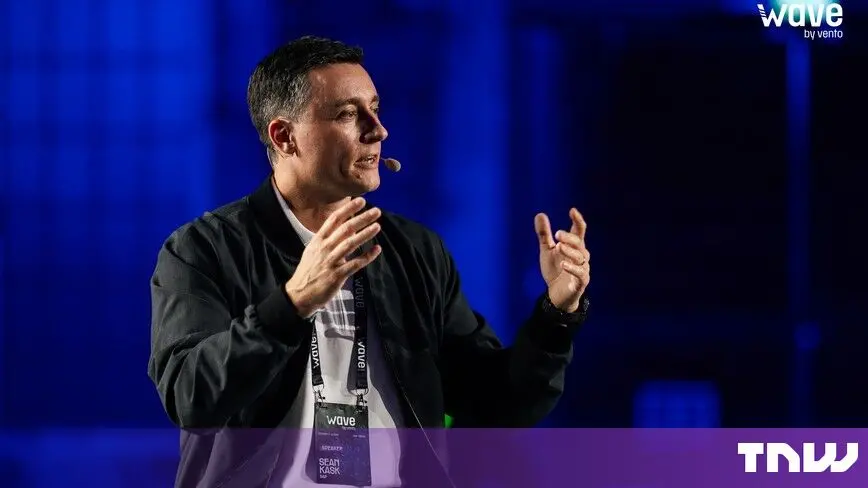
The strategic logic was laid out by Sean Kask, SAP’s chief AI strategy officer, during a session in Turin. Kask argued that established software companies cannot survive by treating AI as an add-on feature. They must rebuild their products around AI from the ground up. He extended a familiar idea: just as every company has become a software company, every software company now has to become an AI company, or it will perish. For SAP, that means rethinking interfaces, data models, and the way enterprise applications generate value.
The problem with tables and language models
Large language models learn by predicting the next word in a sequence of text. That makes them powerful for writing, summarising, coding, and conversation. But it also imposes a mathematical limitation. Tables are not sequences of words. They contain heterogeneous columns, numeric distributions, categorical values, missing entries, and relationships that span rows. A language model cannot natively perform the numerical predictions and classifications that a tabular model can.
Kask estimated that about 80% of business data is unstructured, including text, email, and images. Yet he argued that the remaining 20% held in tables generates about 80% of a company’s value. That inversion is easy to miss because the biggest AI labs focus on scaling language models. The most valuable enterprise data often sits quietly in spreadsheets, transaction logs, supply-chain tables, and customer records. Tabular foundation models are built for exactly that terrain.
Why Prior Labs stood out
SAP began building tabular models in-house a couple of years ago. It already uses its own model, SAP-RPT-1, in production. Prior Labs fitted because its model leads the TabArena benchmark, a public test of tabular AI performance. The startup was also already applying its technology to cancer diagnosis and bank transactions, and SAP had been doing research with it. That combination of benchmark leadership and real-world deployment made Prior Labs a natural acquisition target.
SAP promised to keep Prior Labs as a separate lab with room for its own research. Its model will remain open weight, so researchers and startups can build on it. That structure is unusual for a large enterprise acquisition. It suggests SAP wants Prior Labs to retain the speed and culture of a frontier research lab while giving it the data, distribution, and customer access of a global software company.
From one model per problem to one model for many
Kask described how machine learning used to work inside large companies. A team would build one model for each problem, a process that could take weeks or months. A company might train and tune 100 different models across its operations. With a tabular foundation model, one model can do that work in days, he said, and it beats established methods such as XGBoost on accuracy.
That shift matters because it changes the economics of enterprise AI. Instead of maintaining a sprawling portfolio of narrow models, companies can use a general tabular model that adapts across use cases. The model can handle forecasting, classification, anomaly detection, and scoring without a bespoke engineering project for every table. For SAP, whose software touches finance, procurement, supply chains, HR, and customer experience, that generality is valuable.
SAP’s model-agnostic approach
SAP does not build its own large language model. Kask said that would be costly and that the leading models are converging. Instead, customers can use models from Google, OpenAI, Anthropic, and Mistral. SAP itself uses more than 100 models internally, tests each use case against all of them, and picks the best one. This model-agnostic strategy lets SAP avoid betting on a single provider while giving customers choice.
For SAP, being AI-first also means rebuilding its interface. Users can ask questions in plain language, and the system generates the tables they need on screen. That may sound simple, but it reverses decades of enterprise software design. Instead of navigating menus, transactions, and reports, users describe an outcome. The software then assembles the data, calculations, and visual structure behind it. The interface becomes conversational, while the underlying tabular models do the numerical work.
Europe’s role in the AI race
Kask warned that Europe should not jump into the red ocean of large language models. Spending $10bn on a model that is outdated in six months does not set anyone apart, he said. Europe should instead build the assets that make those models useful. For SAP, that means the knowledge graph that links 500,000 tables and 7 million fields. That semantic layer makes AI agents accurate enough to use at work, because they can ground their answers in a company’s actual data structures and relationships.
Not every European company is taking that route. Mistral launched Large 4, a 1-trillion-parameter open-weight model, on Tuesday. That launch shows there is still appetite in Europe for competing at the frontier of large language models. But Kask’s argument is that the bigger European opportunity may lie in enterprise data, process knowledge, and the connective tissue that turns generic models into reliable business tools.
An ecosystem strategy, not just products
SAP’s approach extends beyond its own research. Kask said every dollar of SAP software sold generates $6 to $10 for its ecosystem of partners. SAP licenses startups’ technology into its products, resells partners through its store, and sometimes buys them. On Tuesday, it agreed to buy TechWolf, a Belgian AI workforce startup. That deal follows the same pattern: identify specialised AI companies, integrate their capabilities, and expose them to SAP’s enterprise customer base.
The Prior Labs acquisition sits at the centre of this strategy. It gives SAP control of a leading tabular model, an open-weight research lab, and a team focused on the data that drives most business value. It also gives SAP a counter-position to the language-model arms race. While others scale text prediction, SAP is scaling prediction and classification on the tables where enterprise decisions are made. The TechWolf deal, announced the same week as Mistral’s Large 4 launch, underscores how SAP is blending acquisitions, partner resale, and open-weight research as it tries to turn enterprise data into working AI systems.