

AI can be built anywhere, but founders still gather
Artificial intelligence has made it easier than ever to launch and run a company from almost any location. Cloud infrastructure, remote collaboration tools, and AI-powered coding assistants have lowered the barriers to building software. Yet the founders behind many of the most promising startups are still choosing to sit together, according to Station F director Roxanne Varza and Anthropic’s Aiden Blake.
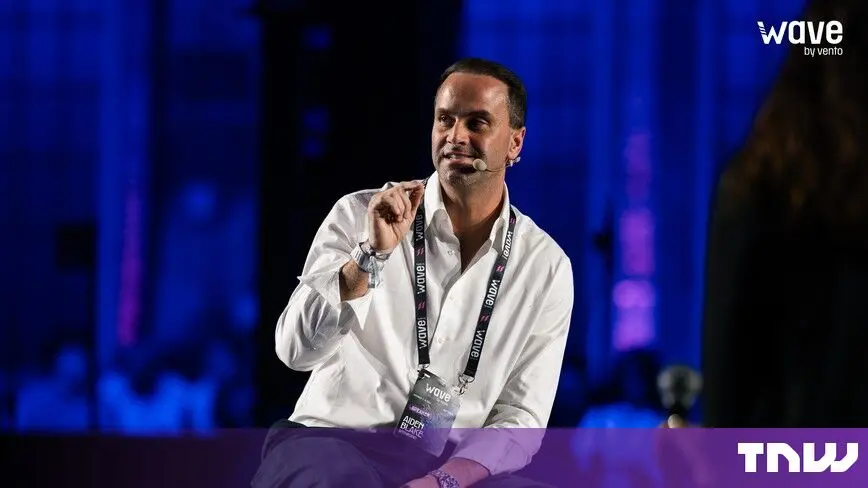
Speaking on a panel in Turin on Thursday, the two argued that physical proximity remains a powerful force in the startup world, even in an era when products can be built and sold online. The discussion, titled “The Power of Proximity,” examined why people, information, and chance encounters still shape company-building. The central message was simple: AI may remove distance as a technical obstacle, but it does not remove the human need for trust, momentum, and shared context.
“What’s really interesting is we’re seeing more and more people coming since the ‘AI boom.’ I think actually a lot of teams are really embracing physical presence,” Varza said. Her observation challenges the assumption that remote-first work and distributed teams have permanently replaced the office for early-stage companies. Instead, she suggested that the latest wave of AI startups is reinforcing the value of being in the same room.
Station F doubles down on physical presence
Station F, the large startup campus in Paris, always hosts around 1,000 early-stage companies on site, Varza said. That scale makes it one of Europe’s most visible experiments in clustering founders, investors, and operators. The campus is not simply a real estate project. It is designed to increase the frequency of interactions that can lead to hires, partnerships, customer introductions, and fundraising.
In February, Station F launched F/ai, a programme dedicated to AI startups. Its partners include Anthropic, OpenAI, Mistral AI, and Meta. The programme allows teams to work in hybrid ways, but participants must come to the campus for certain moments. Without those shared days, Varza said, teams do not get the momentum they need. That requirement reflects a broader belief that early-stage energy is difficult to replicate when everyone is scattered across time zones and calendars.
The international mix of the programme is notable. About two-thirds of the current batch is not French, according to Varza. Teams have come from Asia, Stockholm, the United Kingdom, and Poland. For many of them, Paris is not just a place to rent a desk. It is a gateway to European customers, investors, and talent. The presence of non-French teams also shows how AI has globalized startup formation, even as local ecosystems compete for attention.
Why Anthropic joined the startup campus
Blake said Anthropic joined the programme because it wants to be present in the startup community. The company, known for its AI models and safety research, does not only want to sell to enterprises. It also wants to understand how early-stage builders are using AI, what problems they face, and where the next wave of innovation is emerging. Being physically close to founders is one way to gather that intelligence.
Blake’s own career offers a lesson in the value of ecosystem proximity. He said his last three employers, Google, Notion, and Anthropic, have all been Station F partners. That pattern suggests that leading technology companies see startup campuses as more than marketing opportunities. They are places to recruit, learn, and build relationships with founders who may become long-term customers or partners.
Anthropic supports startups across Europe, the Middle East, and Africa from Dublin, where 150 people work across several teams, Blake said. Dublin offers a deep talent pool and a time zone that covers markets from South Africa to France and Germany. For a company selling to startups across EMEA, that geographic position matters. It allows teams to respond to customers and partners during a broad working day, while still staying connected to European headquarters and investors.
People, information, and serendipity
When asked whether proximity is mainly about people, information, or serendipity, Varza said it is all three. Many founders today are repeat founders with large networks, she noted. Being in the same room with them opens doors that are difficult to open through email or video calls. A casual introduction can lead to a pilot customer, an angel investment, or a key hire. Those outcomes are rarely the result of a formal process.
Varza also argued that relationships cannot be engineered, only influenced. Much of the value of a startup campus comes from leaving room for chance. A founder might meet an engineer at a coffee stand, a future co-founder at a demo day, or an investor at a late-night dinner. These encounters are inefficient by design, but they are often exactly what early-stage companies need. They create weak ties that later become strong partnerships.
Blake said founders at Anthropic’s events want to meet other builders with the same problems. They also want to hear from people who are further along. That desire for peer learning is one reason in-person gatherings remain popular even when online content is abundant. Founders can read blog posts, watch talks, or join webinars, but they cannot easily replicate the trust that forms when they share a room and compare notes.
Blake named access to capital as part of proximity too. He pointed to Stockholm and Warsaw as cities where new companies are emerging. On Wednesday at the same event, Bending Spoons’ Luca Ferrari said capital is no longer Europe’s big barrier. That shift matters. If funding is more available, then the advantage may come from other factors: talent density, customer access, speed of learning, and the ability to build trusted relationships.
Remote-first, then back together
Varza said a great company can now be built from anywhere, but coming together physically still matters. That may sound contradictory, but it reflects the hybrid reality of many modern startups. Teams can hire globally and work asynchronously for much of the week. Yet they still gather for planning sessions, customer meetings, onboarding, and moments that require high-bandwidth collaboration.
Blake offered an example. ElevenLabs started fully remote and opened offices as it grew. Last month it opened one in Brussels. The trajectory is familiar: a startup begins with distributed talent because that is the fastest way to assemble a team. As it scales, it adds physical hubs to improve coordination, culture, and customer proximity. The office becomes less about desks and more about density.
Many people who have worked remotely want to be back around teammates, Blake said, especially in go-to-market roles, where they learn from each other. Sales, marketing, and customer success often depend on overheard conversations, quick feedback, and informal coaching. Those interactions are hard to schedule. They happen in the gaps between meetings, when people can ask a question or watch a colleague handle a difficult call. Not every company agrees. In August, Dropbox’s new co-CEO said remote work is staying at the company. The debate is far from settled.
What will give startups an edge?
Asked what will give a startup its edge in five years, Varza said the technology stack matters. So will how fast founders build relationships, she said. In a world where AI tools are widely available, the technical playing field may become more level. The ability to find the right partner, hire the right person, and earn trust quickly could become a more durable advantage.
Blake said he finds it hard to predict even five days ahead. That humility reflects the pace of change in AI, where models, products, and markets shift quickly. The startups that succeed, he said, will be clear about the problem they solve and keep listening to what customers care about. That final point returns to the theme of proximity: the best way to understand what customers care about is often to be close enough to hear it directly, watch how they work, and respond in real time.
Source:TNW | Ecosystems News