

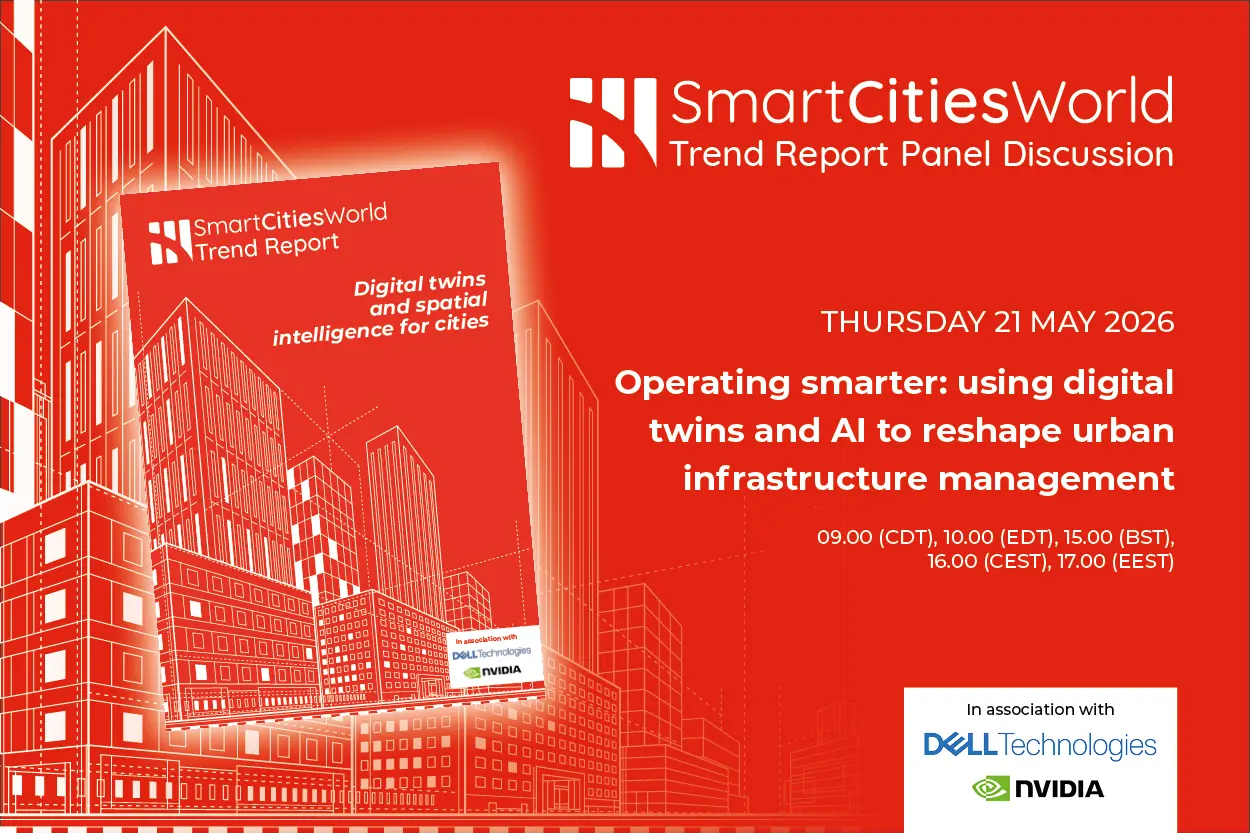
Headline and key facts
Headline: Operating smarter: using digital twins and AI to reshape urban infrastructure management
A panel discussion has put a sharp focus on how cities can use connected data, digital twins, artificial intelligence, edge computing and computer vision to improve citizen engagement, break down departmental silos and make faster, better-informed decisions. The conversation sits at the intersection of three pressures that now shape urban management: climate change, infrastructure resilience and digital transformation.
Key facts at a glance
- Urban leaders are under pressure from climate change, infrastructure resilience and digital transformation.
- Connected data and AI can improve citizen engagement and help dissolve departmental silos.
- AI, edge computing and computer vision can convert growing volumes of urban data into smarter, faster decisions and more responsive services.
- A 2026 smart cities summit during London Climate Action Week will bring urban leaders and partners together to explore how these agendas intersect and how strategy can become practical action.
- Malaysia is positioning itself as an AI-powered urban innovation leader through the first Southeast Asian smart city expo in Kuala Lumpur.
- Singapore is further building its reputation as one of the smartest nations through a city profile focused on its smart-city development.
- Sunderland is repositioning itself as a leading smart city by using digital infrastructure and low-carbon innovation to build a resilient, future-focused economy.
- Professor Jung Hoon Lee is exploring how AI is moving from pilots to real-world impact in cities worldwide.
- The latest global smart city index highlights an emerging AI super gap between cities.
- The next phase of urban innovation depends on data platforms, AI-ready infrastructure and effective governance.
- Smart sensor networks can improve indoor safety by detecting risks early, improving situational awareness and supporting healthier, more secure and sustainable buildings.
- Gareth Tang, president of urban solutions at a technology engineering firm, says urban AI applications are set to evolve and are already making significant impact.
- Related panel sessions and on-demand webinars examine how AI and data are transforming transport operations and services and unlocking value from buildings, data and AI.
Why urban infrastructure management is changing
Cities are not short of data. They are short of ways to turn that data into timely, trusted action. Traffic sensors, building management systems, public transport feeds, environmental monitors, utility meters and citizen service channels all generate information that could improve how a city operates. Too often, however, that information remains trapped in departmental systems, legacy platforms or short-term pilot projects. The result is a familiar paradox: more data than ever, but limited operational insight at the moment decisions must be made.
The pressures are compounding. Climate change is increasing the frequency and severity of heatwaves, flooding and other shocks. Infrastructure resilience demands that assets be maintained, upgraded and operated with greater foresight. Digital transformation promises new tools, but it also introduces new expectations from residents and businesses. Urban leaders must therefore manage physical infrastructure and digital infrastructure as one connected system. Digital twins, AI and edge computing are attractive because they offer a way to model, monitor and optimise that system in near real time.
The panel discussion framed the challenge less as a technology procurement question and more as an operating model question. Cities need to connect data across departments, establish common standards and create governance arrangements that allow insights to travel from a control room to a maintenance crew, from a planning team to a citizen-facing service, or from an emergency response team to a public communication channel. Without those connections, advanced tools remain isolated demonstrations rather than everyday management capability.
From data to decisions: digital twins, AI and edge computing
Digital twins give cities a dynamic representation of physical assets, systems and environments. A digital twin of a transport network, for example, can combine real-time vehicle data, signal timing, incident reports and passenger demand patterns. A digital twin of a building can integrate energy use, occupancy, equipment performance and safety systems. When these models are fed with live data, operators can test scenarios, predict failures and prioritise interventions before problems escalate.
AI adds pattern recognition, forecasting and automation to those models. Computer vision can detect anomalies from camera feeds, such as blocked roads, overcrowding, damaged infrastructure or safety hazards. Edge computing allows some of that analysis to happen close to the data source, reducing latency and bandwidth costs while improving privacy and resilience. Together, these technologies can help cities move from reactive maintenance to predictive operations and from generic services to more responsive, context-aware services.
The discussion emphasised that the value comes from integration rather than individual tools. A computer vision system that identifies a pothole is useful. A system that identifies the pothole, checks asset records, schedules a repair crew, informs affected residents and updates the digital twin is transformative. That requires interoperable data, clear workflows and accountability across departments. It also requires AI models that are monitored for accuracy and bias, especially when they influence public services or safety decisions.
Breaking silos and improving citizen engagement
Departmental silos remain one of the biggest barriers to smarter urban management. Transport, housing, utilities, emergency services, planning and environmental teams may each hold part of the picture, but residents experience the city as a whole. Connected data can help create a shared operational view, allowing teams to coordinate around common priorities such as reducing congestion, improving air quality, responding to severe weather or maintaining critical assets.
Citizen engagement is another area where AI and connected data can make a practical difference. Cities can use digital channels to explain how decisions are made, share real-time service information and invite feedback on local projects. AI can help analyse large volumes of resident input, identify recurring concerns and route issues to the right team. However, the panel discussion also pointed to the need for transparency. If residents are asked to trust AI-assisted decisions, they need to understand what data is used, how it is protected and what recourse exists when something goes wrong.
Responsive services depend on feedback loops. A smart city is not simply a city with more sensors. It is a city that can sense, interpret, act and learn. That learning loop is strongest when citizen engagement is treated as an operational input rather than a communications afterthought. Data from service requests, public consultations and community groups can reveal where infrastructure is failing or where services are not reaching the people who need them most.
Governance, data platforms and AI-ready infrastructure
The next phase of urban innovation depends on data platforms, AI-ready infrastructure and effective governance. Data platforms provide the foundation for sharing, quality control and access management. AI-ready infrastructure includes the connectivity, computing capacity and security architecture needed to run models reliably. Effective governance sets the rules for procurement, data ownership, privacy, cybersecurity, model oversight and cross-departmental collaboration.
These foundations are not glamorous, but they determine whether pilots can scale. A city may launch a successful AI pilot in one district, yet struggle to expand it because data standards differ, budgets are siloed or procurement rules were not designed for iterative technology delivery. The panel discussion suggested that cities should treat data and AI as long-term public infrastructure, with clear investment plans, skills development and maintenance budgets. They should also avoid vendor lock-in by requiring interoperable systems and open standards where appropriate.
Governance must be proportionate and practical. Not every decision needs a complex approval process, but high-impact uses such as surveillance, predictive policing or automated eligibility decisions require stronger safeguards. Cities need mechanisms for auditing algorithms, handling exceptions and ensuring human accountability. The discussion positioned governance not as a brake on innovation but as a condition for trusted, sustainable innovation.
City examples show different routes to smarter operations
Malaysia
Malaysia is leading the way in AI-powered urban innovation through the first Southeast Asian smart city expo in Kuala Lumpur. The event signals a regional ambition to connect urban data, AI and digital services with practical city challenges. For cities in fast-growing regions, the opportunity is to design data and governance foundations early, rather than retrofitting them after fragmented systems have already taken hold.
Singapore
Singapore is further building its reputation as one of the smartest nations in the world through a city profile that examines its smart-city development. The city-state has long treated digital infrastructure, planning and service delivery as integrated priorities. Its experience shows that sustained political commitment, strong data governance and continuous investment in skills are as important as any single technology deployment.
Sunderland
Sunderland is repositioning itself as a leading smart city by using digital infrastructure and low-carbon innovation to build a resilient, future-focused economy. The city’s approach highlights how smart-city strategies can be tied to economic renewal, energy transition and local skills. Digital twins and AI are most useful when they connect to those broader outcomes rather than existing as standalone technology projects.
Pilots to impact: the AI super gap and the role of leadership
Professor Jung Hoon Lee has explored how AI is moving from pilots to real-world impact in cities worldwide. In a related conversation, he discussed the latest global smart city index, the emerging AI super gap between cities and why the next phase of urban innovation depends on data platforms, AI-ready infrastructure and effective governance. The idea of an AI super gap points to a widening divide between cities that can scale AI responsibly and those that remain stuck in experimentation.
Closing that gap is not simply a matter of buying more technology. It requires leadership to set priorities, align budgets and build internal capability. Cities need teams that can manage data, commission AI systems, evaluate performance and work across departments. They also need to engage residents and businesses as partners in defining problems and assessing outcomes. The panel discussion made clear that the most successful cities are likely to be those that treat AI as part of a broader management transformation, not as a standalone IT project.
Indoor safety, transport and buildings: practical AI use cases
Smart sensor networks can help improve indoor safety by detecting risks early, improving situational awareness and supporting healthier, more secure and sustainable buildings. Sensors can monitor air quality, temperature, occupancy, equipment performance and hazardous conditions. When combined with analytics, they can alert building managers to emerging problems, optimise energy use and support safer evacuation or maintenance decisions. The same principles apply across city infrastructure, where early detection can prevent small failures from becoming costly disruptions.
Gareth Tang, president of urban solutions at a technology engineering firm, has explained how urban AI applications are set to evolve, detailing projects where AI is already making significant impact. His perspective reinforces a common theme: the strongest use cases are often operational rather than speculative. They involve maintenance, safety, transport, energy and service delivery, where AI can support human teams with better information and faster analysis.
Transport operations are a particularly active area. AI and data can help cities monitor network performance, predict demand, manage incidents and coordinate responses across modes. Panel sessions and on-demand webinars have examined how AI and data are transforming transport operations and services, as well as how cities can unlock value from buildings, data and AI. These discussions point to a future in which transport, energy and buildings are managed as interconnected systems rather than separate domains.
The operational lesson is that value emerges when data is connected to a decision, a workflow and an accountable owner. Digital twins provide the model, AI provides the analysis, edge computing provides the responsiveness and governance provides the trust. Cities that can combine these elements will be better placed to manage climate risk, maintain infrastructure and deliver services that residents can see and feel. The next phase of urban innovation will depend on whether cities can turn data platforms, AI-ready infrastructure and effective governance into a repeatable operating model.
Source:Smart Cities World News