

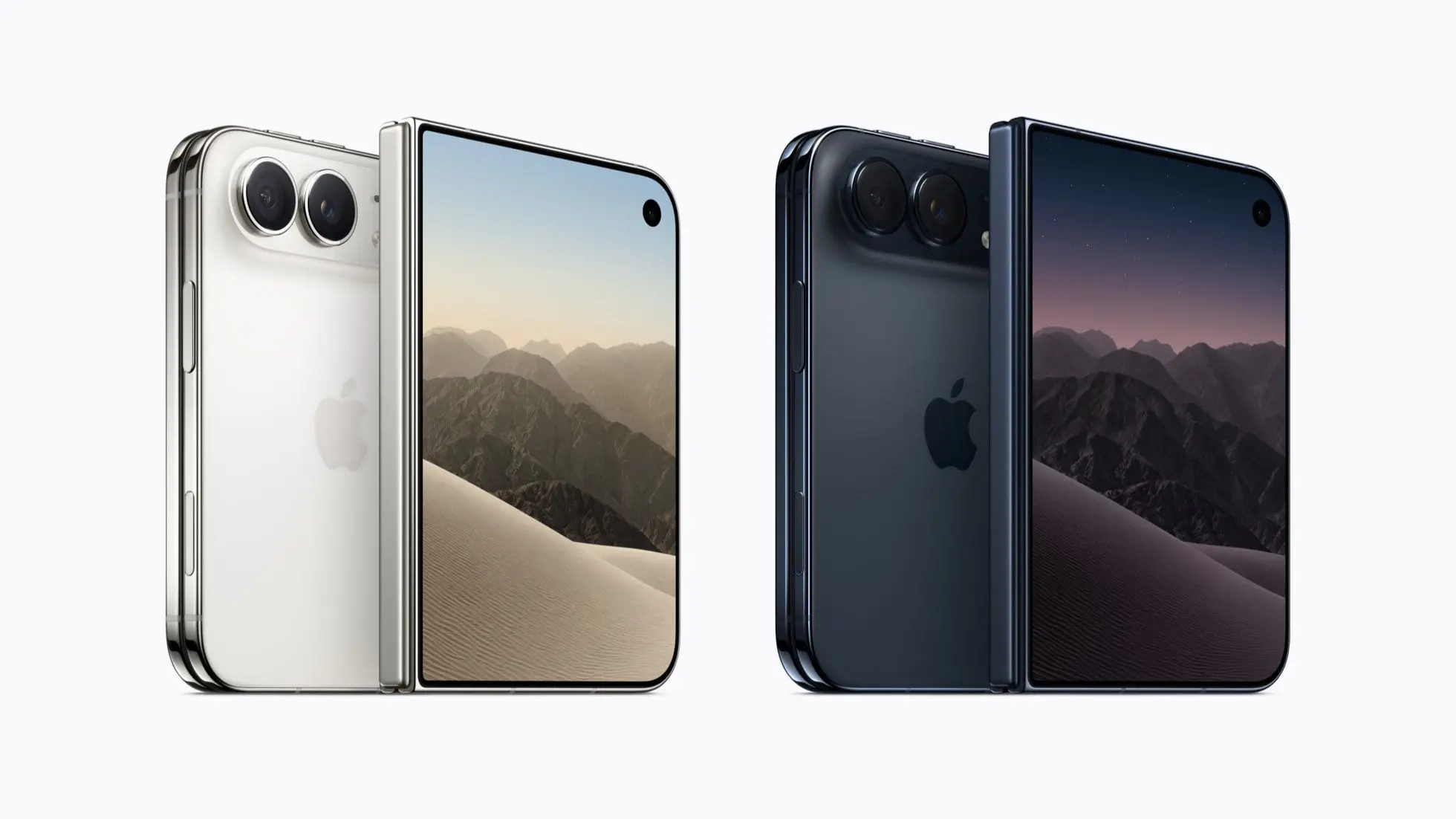
Apple's first dual-screen iPhone has become the hardest Apple product to buy in a decade, and the color you pick may matter more than it ever has on a standard iPhone. Between finish durability, the adhesive-mounted cases Apple sells alongside the device, and a resale market that has already pushed sealed units past $5,000, the choice between Midnight, Starlight, Sky Blue, Sage, and Blush is a practical decision as much as an aesthetic one.
What follows is a working buyer's guide to the iPhone Duo finish lineup — what each color actually looks like in person, how each one wears over a year or two of folding and unfolding, how they behave on the secondary market, and which finish makes sense for which kind of buyer.
The Full Finish Lineup at a Glance
Apple has settled on a five-color palette for the iPhone Duo, split between two neutrals and three saturated options. The frames are color-matched across the board, which is a departure from earlier Apple practice of pairing nearly every body with a silver or black rail.
- Midnight — A near-black deep navy that reads as charcoal in indoor light and shows a faint blue cast in direct sun. It is the most conservative option in the lineup and the one Apple has featured most heavily in its own marketing renders.
- Starlight — A warm off-white with a subtle champagne undertone. It is the lightest finish available and the one that photographs most dramatically against the Duo's dark inner display.
- Sky Blue — A desaturated, gray-leaning blue that sits between Apple's past Sierra Blue and the brighter blues used on entry-level models. It is the most broadly appealing of the three saturated options.
- Sage — A muted green with a soft, almost chalky matte character. It is the boldest color that still reads as neutral in an office setting.
- Blush — A pale pink with a warm copper edge, closer to rose gold than to the candy pinks of earlier generations. It is the finish most likely to sell out first at the retail level.
How Each Finish Actually Ages
Color on a folding phone is not just a cosmetic layer. Because the Duo's outer panel wraps around a hinge assembly and meets a soft inner display, the finish is exposed to more mechanical contact than on a slab iPhone — pocket edges, table surfaces, hinge dust, and the repeated friction of opening and closing.
Fingerprints and skin oil
Midnight is the worst offender for visible smudging. The matte texture diffuses oil slightly, but the contrast between a clean panel and a handled one is highest on the darkest finish. Sky Blue is a meaningful improvement, and Sage hides fingerprints better than any other color in the lineup. Starlight shows smudges but hides them in bright light, which makes it the most forgiving finish for daylight use and the least forgiving under warm indoor bulbs.
Scuffs, scratches, and hinge wear
Damage on a colored anodized surface almost always reveals a lighter metal underneath, which is why darker finishes show edge wear more dramatically. Midnight will show a bright nick near the hinge or the USB-C port within months of heavy use. Starlight and Blush show wear as a darkening rather than a brightening, which most owners find less jarring. Sage sits in the middle: scuffs read as small gray marks that are easy to overlook at arm's length.
Discoloration
Light finishes are more susceptible to dye transfer from denim, leather wallets, and dark cases. Starlight and Blush owners should expect some transfer along the bottom edge of the outer panel if the phone lives in a pocket without a case. Midnight and Sage are essentially immune to this class of wear.
The Case Problem: Adhesive Backs Change the Math
Apple's $79 first-party case for the Duo does not clip on. It adheres to the rear panel with a pressure-sensitive adhesive, which means installing it is effectively a semi-permanent decision — and removing it risks lifting the finish or leaving residue that is very difficult to clean off a matte surface.
That single design choice reframes the entire color question. If you intend to use a first-party case from day one, the color of your phone will be invisible for most of the time you own it. In that scenario, the finish should be chosen for resale value and for the small exposed areas around the camera plateau and hinge, not for how it looks on day one. Buyers who plan to go caseless — or who plan to use a third-party folio that relies on friction or magnetic mounting — should weight appearance and wear resistance much more heavily.
Resale Value: Neutrals Still Win
The early secondary market for the Duo is unlike anything seen on a recent iPhone. Sealed units have traded for as much as $5,000 on auction sites after the first pre-order allocation sold out, and demand has remained strong enough that Apple has publicly described it as extraordinary. That scarcity premium will not last forever, but it does mean color choice has a real, measurable effect on what a used device fetches.
Historically, neutral finishes outperform bright ones on resale by a small but consistent margin, because the pool of buyers willing to pay a premium for a green or pink phone is narrower. Midnight and Starlight will hold value best once supply normalizes. Blush and Sage will likely command a premium during the initial scarcity window and then converge toward the neutrals. Sky Blue is the safest middle ground: broad enough appeal to sell quickly, distinctive enough to attract buyers who do not want another black phone.
Availability Reality: Shipping Windows Now Stretch Into 2027
Color availability is not evenly distributed. The first wave of pre-orders exhausted launch-day inventory within hours, and shipping estimates on several configurations slipped into 2027. Retail staff have reportedly been instructed to warn customers against walk-in purchases, and at least one well-placed observer characterized the pre-order rollout as a major mistake given how badly demand was underestimated.
In practice, this means the finish you want may not be the finish you can get soonest. Neutral colors are typically produced in the highest volumes, so Midnight and Starlight are the most likely to ship earlier. Blush and Sage, produced in smaller runs, are the most likely to show the longest delays. If timing matters more than shade, check each configuration's estimated window individually rather than assuming all five colors share one date.
Matching the Color to Your Use Case
First-time folding-phone buyers
Go with Sage or Sky Blue. Both hide handling marks well, both photograph accurately, and neither will look dated in two years. Sage in particular is forgiving of the small abrasions that tend to appear around a hinge on a first-generation folding design.
Buyers upgrading from a recent Pro model
Midnight is the natural continuation of a graphite or black titanium phone and will feel familiar in hand. If the goal of the upgrade is to feel like a genuine change, Blush is the most dramatic departure without tipping into novelty.
Case users
Buy Starlight. It is the finish most likely to be fully hidden by a dark case, it shows the least contrast if the adhesive edge collects dust, and it holds value better than the saturated colors once the device is a year old.
Collectors and resellers
Blush, sealed, in the highest storage tier. Scarcity plus color premium is the combination that has historically produced the strongest short-term returns on limited Apple hardware, and early auction results suggest the pattern is repeating here.
Business and fleet buyers
Midnight, uniformly. It matches existing accessory ecosystems, shows less variation between production batches, and is the least likely to draw attention in a meeting room.
The Costs That Sit Outside the Color Decision
Two other line items deserve a place in the budget before checkout. Apple has confirmed the Duo's battery capacity, and the numbers suggest the dual-display design draws meaningfully more power than a single-screen flagship, so a battery case or a second charger is a realistic add-on. Separately, at least one major carrier plans to charge $10 per month for its iPhone handoff feature, which over a two-year term adds $240 to the cost of ownership.
Combined with the $79 adhesive case, those extras run well past $300 — enough that many buyers will end up choosing the color that ships soonest rather than the one they like best, simply to stop the clock on a shipping window that already extends into 2027.
A Practical Checklist Before You Order
- Decide first whether you will use the adhesive case. If yes, choose for resale, not appearance.
- Handle the phone in a store if possible — Sky Blue and Sage both read noticeably cooler under retail lighting than in marketing images.
- Check the estimated shipping window for your exact color and storage combination, not the headline date.
- Budget for the case, an extra charger, and any carrier handoff fee before committing to a higher storage tier.
- If you buy to resell, keep the box sealed; the scarcity premium on unopened units is currently the largest single factor in value.
- If you buy to use, accept that the hinge will show wear first regardless of color, and pick the finish that makes that wear least obvious.
The finish is the one decision in the entire Duo purchase that cannot be changed later — not with a case, not with a skin, and not with a trade-in that discounts a non-neutral color at resale. With pre-orders already sliding toward 2027 and retail stock effectively nonexistent, buyers have an unusually long window to think it through, and unusually little room to correct a choice made in a hurry.
Source:MacRumors News