

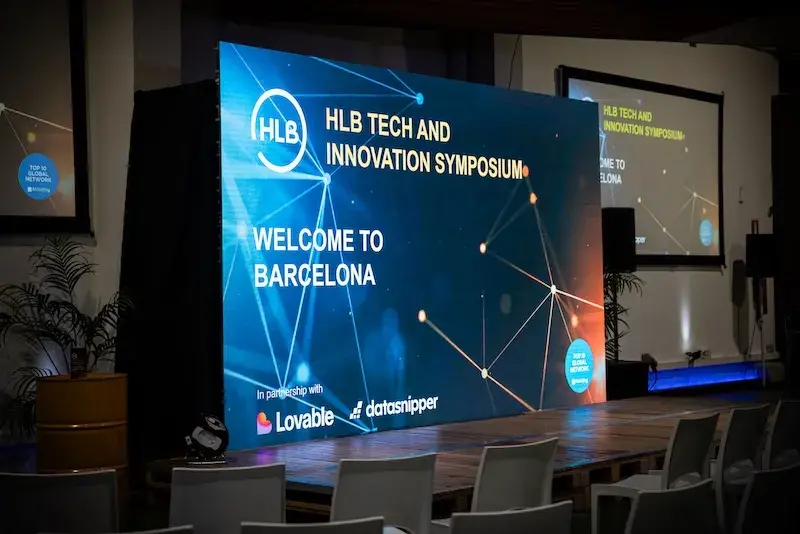
A global accounting and advisory network has held its second Tech & Innovation Symposium in Barcelona, bringing together colleagues from more than 17 countries to examine how artificial intelligence and automation can be applied in practice across accounting, advisory and tax work. The event was designed less as a showcase of emerging technology than as a working session: participants were asked to test tools, build prototypes and consider how new systems could improve client outcomes and internal workflows.
The symposium reflects a broader shift in professional services. Firms are under pressure to process larger volumes of data, respond to fast-changing regulation and deliver advice more quickly, while maintaining the judgement and accountability that clients expect. AI has moved from experimental pilots into mainstream discussion, but many firms are still working out where the technology creates genuine value rather than superficial efficiency. The Barcelona gathering focused on that gap between experimentation and implementation.
Hackathon turns ideas into working prototypes
A central feature was a hackathon that gave participants hands-on experience with cutting-edge agentic AI tools. Working in teams, colleagues collaborated on prototypes based on challenges they encounter in daily work. They then pitched their ideas to the wider group, allowing them to experiment with the technology and explore how it could be applied in their day-to-day roles.
An official hackathon partner helped guide firms through the live build, delivering a demonstration and sharing prompt engineering expertise so that members could turn ideas into working prototypes in the room. The exercise was intended to demystify AI development and show that useful applications can be created quickly when teams start from real business problems rather than abstract technology goals.
Potential applications built and tested included automation that turns new regulatory requirements into client-ready solutions, a readiness toolkit for new e-invoicing mandates, tools that draft VAT returns, faster and safer client onboarding through digital identity and smarter know-your-customer checks, and technology that identifies trends and spots potential issues early. That final category was seen as particularly valuable because it could help professionals provide more timely and informed advice instead of reacting after problems have already crystallised.
- Automating the translation of regulatory changes into client-facing guidance.
- Creating readiness toolkits for new electronic invoicing mandates.
- Drafting VAT returns and supporting repetitive tax workflows.
- Improving onboarding with digital identity and smarter KYC checks.
- Identifying trends and early warning signs from large information sets.
The prototypes were not intended to be finished products. Their value lay in what they revealed about feasibility, data requirements, risk controls and the changes needed in workflows and training. Teams could see where an AI tool saved time, where it needed human review, and where a promising idea might fail once exposed to messy real-world information.
Enterprise adoption and the next wave of AI
The technology partner also shared expertise covering enterprise AI adoption, how it uses its own platform internally, and practical opportunities for accounting and advisory firms to turn ideas into useful products for both teams and clients. The discussion highlighted that adoption is not simply a matter of buying a tool. It requires clear use cases, accessible data, appropriate governance, staff training and a willingness to redesign processes rather than bolt AI onto existing ways of working.
For accounting and advisory firms, the most immediate gains have often come from efficiency. AI can save colleagues time on routine work and help analyse much larger amounts of information, drawing out insights that might otherwise be difficult to identify. That can lead to better advice for clients and give teams more time to focus on areas where their experience and judgement really matter. But the symposium also explored a more ambitious question: whether AI can improve quality, not just speed.
That next wave involves making processes smarter and creating new ways of doing things. Instead of asking how a task can be completed faster, firms are beginning to ask how AI can change what is possible: earlier identification of risk, more consistent review, better use of unstructured data and more responsive client service. The shift matters because efficiency alone rarely transforms a professional services business. Quality, insight and trust are the differentiators that clients ultimately value.
Lessons from football and from the host firm
Representatives from a leading football club explored how AI is redefining the operating model of modern football clubs. As a strategic enabler of its digital transformation, AI is being used to unlock value across performance analytics, fan engagement and commercial operations. The club has leveraged AI to strengthen decision-making and performance without compromising its football identity, according to the session.
The football example offered a useful contrast to professional services. Both sectors depend on expert judgement, but both also generate enormous amounts of data. In football, AI can support scouting, injury prevention, tactical analysis and commercial targeting. In accounting and advisory work, it can support compliance, risk assessment, client onboarding and the interpretation of complex information. In each case, the technology is most effective when it augments human expertise rather than replacing it.
The host firm’s Spanish member also shared examples from its own AI journey, including an audit tool, an automated tax workflow and a firm-wide training programme. A key takeaway from that session was that firms must thoroughly test internal capability before using solutions in client-facing work. Internal testing helps teams understand limitations, identify errors, build confidence and establish review protocols. It also protects clients from premature deployment of tools that may not yet be reliable enough for regulated or high-stakes work.
Balancing efficiency with quality and trust
The network’s chief innovation officer said AI and automation are already changing the way professional services firms operate, but the real opportunity lies in moving beyond experimentation and identifying where they can make the biggest difference to people and clients. Many firms are currently focusing on using AI for efficiency: streamlining operations, increasing productivity and cutting costs. That is a rational first step, but it is not the end point.
The emerging opportunity is in using AI to enhance quality. That means not just making processes faster but also smarter and creating new ways of doing things. For accounting and advisory professionals, quality can mean more accurate compliance, earlier identification of issues, more consistent advice and better use of specialist time. It can also mean giving clients faster access to relevant insight while preserving the human judgement that regulated work demands.
The aim of the symposium was to give people the space to test these technologies for themselves. By applying them to challenges they face in their work, participants could better understand which ideas have the potential to be taken forward and implemented across the network. That approach recognises that innovation in professional services is rarely driven by technology alone. It depends on practitioners who understand client needs, regulatory constraints and the practical realities of delivering advice.
The event also underlined the importance of collaboration across borders. A network spanning more than 17 countries can share prototypes, lessons and risk controls that individual firms might struggle to develop alone. Common challenges around regulation, data protection and client expectations make cross-border learning especially valuable. At the same time, local market conditions and legal requirements mean that solutions must be adapted rather than simply copied.
As firms move from pilot projects to broader deployment, the questions become more demanding. Which use cases should be scaled? How should AI outputs be reviewed? What data can be used, and under what controls? How should staff be trained to work with agentic tools that can take actions rather than simply generate text? The Barcelona symposium did not claim to answer all of these questions, but its emphasis on live testing gave participants a practical starting point.
The hackathon format also demonstrated the value of rapid experimentation. Teams that began with a specific pain point were able to produce working prototypes in a short space of time, then compare notes on what worked and what did not. That experience can help firms evaluate vendors, prioritise investment and avoid chasing technology for its own sake. It can also build internal confidence and reduce the fear that often surrounds AI adoption.
For clients, the ultimate test will be whether these tools lead to better outcomes: clearer advice, faster responses, fewer errors and more proactive support. For firms, the test will be whether they can integrate AI without eroding the professional standards that underpin trust. The symposium’s focus on practical applications, internal testing and quality enhancement reflects that dual challenge. The next phase will involve taking the most promising prototypes and turning them into governed, scalable solutions that work in real client engagements.
Source:UKTN News