

Europe’s venture ecosystem reaches a tipping point
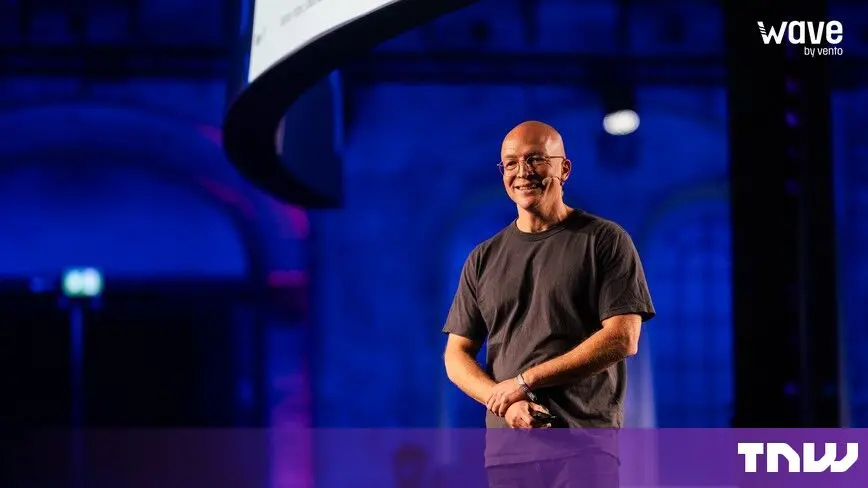
Europe’s venture-backed companies are on course to be worth more than the continent’s traditional industrial base within five years, according to new industry data presented at a technology conference in Turin. The founder and chief executive of a European tech data platform said the venture capital ecosystem is approaching a historic threshold, and that the first trillion-dollar venture-backed company is likely to emerge from a business that is still early stage today.
‘I think that the VC-backed ecosystem is going to overtake our industrial base in terms of total value created within the next five years, if we play our cards right,’ he told an audience at the event. ‘And I think that also the first trillion-dollar VC-backed company is going to be created. And it’s a company that’s maybe still early stage today, so we have to think about that future and also prepare for it and have the conditions for that to really happen.’
The remarks came during a session on the state of the European technology ecosystem, followed by a conversation with a partner at a venture firm. The data paints a picture of an ecosystem that has grown rapidly in scale, but still faces structural gaps in late-stage capital, public markets, and pension investment.
Investment and valuation on the rise
European venture investment is running at $89bn a year and rising. Large rounds for companies such as Mistral, Helsing and Isomorphic Labs are driving the increase. Mistral raised €3bn in September, a signal that European AI companies can attract capital at scale.
Europe now has 56 venture-backed companies worth more than $10bn. Together, its venture-backed companies are worth $4.4tn, almost a quarter of the value of Europe’s stock market. Exits by venture-backed companies this year are larger than in previous years combined. They include Milan’s Bending Spoons, which raised $1.68bn in its US listing in July.
The figures show 54,771 European startups that have raised at least $100,000, against 79,432 in the US. The gap widens at each stage. Europe has 1,233 companies that have raised $100m or more, against 5,115 in the US. Four European companies are worth more than $100bn: Spotify, Arm, Booking.com and Revolut. The US has seven worth more than $1tn, and Europe has none.
Rounds of $100m or more show a fourfold gap with the US. But for the same amount of capital raised, European startups are as likely to become unicorns as American ones. That finding challenges the idea that European founders are less capable of building large companies. Instead, it suggests the difference lies in the amount of capital available to scale them.
Where the money goes—and where it leaves
US firms such as Sequoia, General Catalyst and Accel have almost doubled their investment in Europe year on year. As a result, overseas investors own most of the later-stage shares in Europe’s most successful startups. The gains from those companies then leave Europe. This dynamic means that even as European tech creates value, a large share of the financial return accrues to investors outside the continent.
Europeans save a lot, but most of it goes into bank accounts and housing, not into equity. Putting just 1% of Europe’s pension capital into venture capital would raise the money available to scale-ups by 50%. European pension funds and insurers hold about €15tn. Over the past decade, they put €15.5bn into venture capital. This year alone, about $50bn of European capital went into bonds issued by US hyperscalers. The contrast is stark: European savings are financing American technology giants rather than European scale-ups.
The same gap shows up in AI. A new AI report says four US hyperscalers expect about $733bn in capital spending this year. The EU’s initial contribution to AI gigafactories is €1bn, within a plan seeking up to €10bn in public money and at least €20bn from private investors. A data centre in Europe does not give Europe control of the models inside it. Without domestic compute, talent, and capital, Europe risks becoming a consumer of AI rather than a producer.
Not only a capital problem
More money will not be enough on its own. Countries where restructuring a company is costly, such as Spain, Italy and France, have fewer unicorns per person. In Denmark and the US, the cost is low. About 42% of European unicorn founders built their companies in the US. That statistic highlights how regulatory friction, labour market rules, and bankruptcy regimes can push founders to scale elsewhere.
There are calls for a single European capital market, an idea backed by prominent European policymakers. A proposed company form that would work across the EU, known as EU Inc, is also gaining support. Such reforms aim to reduce the fragmentation that forces startups to navigate 27 different legal and tax systems. A true single market for capital would allow pension funds to invest across borders more easily and give scale-ups access to a much larger pool of equity.
European governments spend about €2tn a year on public procurement, and only a tiny share reaches startups. Defence is the exception, where money has flowed to companies such as Helsing and Quantum Systems. Quantum Systems raised $1.2bn in July. The same approach is needed in space, energy and compute, according to industry observers. Public procurement can act as a catalyst for innovation if governments use their purchasing power to support young companies.
The road to a trillion-dollar company
The prospect of a first trillion-dollar venture-backed company in Europe depends on more than a few large funding rounds. It requires a deep pipeline of startups, a functioning exit market, and a regulatory environment that allows companies to scale without leaving the continent. Europe has shown it can create world-class technology: Spotify, Arm, Booking.com and Revolut are proof. But the next generation of giants will need later-stage capital that is currently scarce.
Pension reform is central. If European pension funds allocated even a small fraction of their assets to venture capital, the impact would be transformative. The €15tn held by pension funds and insurers represents a vast pool of long-term capital. Redirecting a sliver of that into European venture would help close the late-stage funding gap with the US. It would also keep more of the returns from European success stories within Europe.
At the same time, the ecosystem must address the exit gap. Europe’s public markets are less deep for technology companies, which pushes many startups to list in the US. Bending Spoons’ US listing is a recent example. Building stronger European Nasdaq-style exchanges and encouraging institutional investors to participate in IPOs could help retain more companies. The lack of $1tn companies in Europe is not due to a lack of talent or ideas, but to a lack of capital and market infrastructure to support them.
The AI race adds urgency. The US is spending hundreds of billions on compute infrastructure. Europe’s public contribution to AI gigafactories is smaller by orders of magnitude. Without a coordinated approach to compute, energy, and data, European AI companies may struggle to compete at the frontier. The report’s warning that a data centre in Europe does not give Europe control of the models inside it is a reminder that infrastructure alone is not enough. Sovereignty requires ownership of the technology stack.
Defence tech has shown what is possible when procurement and capital align. Helsing and Quantum Systems have attracted significant investment, partly because defence ministries have become customers. That model could be replicated in other strategic sectors. Space, energy, and compute are all areas where public procurement could de-risk early customers and attract private capital. The €2tn annual procurement budget is a powerful lever if used strategically.
Ultimately, the forecast that Europe’s venture-backed ecosystem could overtake its industrial base within five years is not guaranteed. It depends on policy choices, capital market reforms, and the willingness of European institutions to invest in their own technology. The first trillion-dollar venture-backed company may already exist as a small startup. Whether it scales in Europe or elsewhere will depend on the conditions Europe creates today.
Source:TNW | Ecosystems News